AI Content Writing Tools: Use Cases and Workflows
Last updated: October 10, 2026
Key Takeaways
- AI content writing tools matter most when they remove a specific bottleneck in your publishing process.
- AI content tools work best for repeatable, medium-stakes writing with a clear format and a known audience.
- ChatGPT is better for flexible drafting, rewriting, and thinking through messy prompts; Jasper is better when you want a more guided marketing workflow with built-in brand and campaign structure.
- A good AI content workflow runs brief first, generate second, verify third, revise last.
Quick Answer: AI content writing tools are most useful when they save at least 30 to 60 minutes per draft and still leave room for human review. AI content writing tools are best used as fast drafting and editing assistants, not as replacement brains. If the job is to produce clearer briefs, faster first drafts, stronger rewrites, and more consistent SEO pages, the right tool can save hours; if the job is to publish sensitive, regulated, or highly original work without human review, these tools are the wrong fit.
I write about content strategy and editorial systems, so I judge these tools by workflow impact: how they change the first draft, the edit, the approval loop, and the risk of publishing something thin or wrong. That lens matters more than feature lists, especially in the context of AI content writing tools: use cases and workflows — The Complete Guide.
The real question: what are you hiring AI to do?

AI content writing tools are worth paying attention to only when they remove a specific bottleneck in your publishing process. The bottleneck is usually one of four things: too much blank-page time, too many repetitive drafts, too much variation between writers, or too many hours spent turning research into usable prose. If none of those describe your work, you probably do not need a content-writing tool at all.
That sounds blunt because the market is noisy. A tool that writes “blog posts” sounds useful until you ask what kind of article, for whom, and under what editorial rules. A 1,200-word evergreen explainer for a SaaS site has a very different workflow from a product page, a customer email, a LinkedIn post, or a compliance-sensitive article. The tool choice depends less on the label “AI writer” and more on where the text must land in your process.
The practical question is this: do you need speed, structure, variation, or scale? If your team needs all four, the workflow matters more than the model name. I would start by classifying the work into three buckets: idea generation, draft generation, and editorial transformation. Most generic articles pretend those are the same job. They are not.
For context, OpenAI reported in 2023 that ChatGPT reached 100 million weekly users, which shows how quickly general-purpose AI writing tools entered everyday workflows. At the same time, usage scale is not the same as editorial fit, so the more important question is still whether the tool reduces friction in your article process.
Here is the simplest rule I use: AI helps most when the output can tolerate a human edit. It helps least when the text must be legally exact, medically cautious, or distinctly voiced from the first sentence. A glossary page for an internal knowledge base is a good candidate. A financial recommendation letter is not.
Which use cases are actually worth automating?
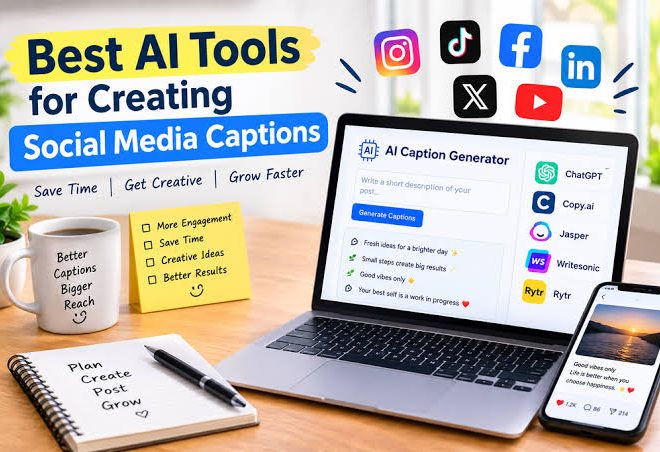
AI content tools are most valuable for repeatable, medium-stakes writing with a clear format and a known audience. That means SEO briefs, outline creation, first drafts of blog articles, meta descriptions, content refreshes, product copy variants, social captions, email subject lines, FAQ expansions, and repurposing long-form content into shorter formats. These are the jobs where a model can speed up structure without pretending to supply final judgment.
The strongest use case is usually the first draft. For a 1,500-word article, a tool can give you a rough outline, a draft intro, missing subheads, and alternative phrasings in minutes. That does not make the draft publishable. It makes the page editable. In a normal editorial workflow, that is enough to justify the tool because the blank-page penalty is real.
The second strong use case is content updating. If you already have an article from 2021 that needs new examples, cleaner headings, and tighter intros, AI can help rework sections faster than starting from scratch. The same applies to rewriting product descriptions across 50 SKUs, as long as a human checks for accuracy and brand voice.
The weaker use cases are the ones vendors love to market. Fully automated “thought leadership” is risky because the model can produce fluent text that sounds confident and says very little. Long-form SEO without human fact-checking is another trap; a tool can create volume, but volume is not authority. For any topic where a wrong claim costs trust, time spent checking often eats up the time saved drafting.
A good dividing line: if the article can be judged mainly on structure, tone, and completeness, AI can help. If it must be judged mainly on expertise, evidence, or original reporting, use the tool only as an assistant. That distinction matters for healthcare, legal, finance, and technical documentation, where human review is not optional.
Because the best results usually come from repeatable workflows, many teams also pair AI drafting with SEO article planning and content brief templates. When the format is stable, an article is easier to standardize and review.
ChatGPT vs Jasper: which kind of work fits each one?

ChatGPT is better for flexible drafting, rewriting, and thinking through messy prompts; Jasper is better when you want a more guided marketing workflow with built-in brand and campaign structure. That is the short answer, and it is the one I would use if I had to choose on workflow alone.
The difference is not just output quality. It is how much control you want at the prompt level versus the interface level. ChatGPT rewards a writer who can write a clear brief, specify audience, define angle, and iterate. Jasper tends to help teams that want templates, campaign organization, and a more opinionated content-production setup. If your process already lives in an article brief and a shared editorial calendar, either tool can fit. If your process is loose and the writer is doing the thinking on the fly, ChatGPT usually gives more room to adapt.
| Criteria | ChatGPT | Jasper | Winner for condition |
|---|---|---|---|
| Prompt flexibility | Very high; good for custom instructions and unusual formats | More structured, with templates and guided flows | ChatGPT for bespoke work |
| Brand consistency | Depends heavily on prompts and examples | Strong emphasis on brand voice and repeatable workflows | Jasper for team-based brand control |
| Research-heavy drafting | Good for synthesis and rephrasing, still needs source checking | Useful for marketing content, less central for deep synthesis | ChatGPT for mixed research and writing tasks |
| Template-driven campaigns | Possible, but you build more of the structure yourself | Designed around campaign and asset workflows | Jasper for repeatable campaign output |
| Ease for non-writers | Can feel open-ended and requires better prompting | More hand-holding for marketers and operators | Jasper for less technical users |
| Revision speed | Fast for rewrites, expansions, and tone shifts | Fast when the work matches the template | ChatGPT for flexible edits |
| Unique content angles | Better at generating alternatives and testing framing | Better at production consistency than originality | ChatGPT for ideation |
| Best fit team size | Solo writers, editors, strategists, hybrid teams | Marketing teams that want shared process | ChatGPT for smaller or more varied teams |
ChatGPT wins for writers who need a thinking partner and can write strong prompts. Its strength is range: one session can move from outline to rewrite to tone adjustment to headline options. The drawback is that it will happily produce polished nonsense if the prompt is vague. That means the consequence of weak direction is hidden labor later in the edit.
Jasper wins for teams that want structure and repeatability. If the pain point is not idea quality but output coordination, the platform’s guided approach can reduce chaos. The trade-off is less freedom. That matters when you need a strange format, a very specific voice, or a piece that has to follow a custom editorial logic instead of a template.
For a solo blogger, strategist, or editor who can steer the process, I would choose ChatGPT. For a marketing team that wants a shared system for recurring assets, Jasper has the cleaner workflow fit. Neither is ideal if you expect the tool to replace subject-matter checking.
How should you build a workflow that does not create more editing?
A good AI content workflow is: brief first, generate second, verify third, revise last. If you reverse those steps, the tool starts creating cleanup work instead of saving time. The biggest mistake I see is people asking for a full article before they know the angle, the reader, or the proof points. That produces generic copy that looks finished and still needs a human rebuild.
Start with a one-page brief. Include the audience, the job of the page, the key takeaway, the required sources, the do-not-say list, and the format. If the piece is an SEO article, add target query intent and the required sections. If it is marketing copy, define the offer and the conversion action. A model cannot infer what your editorial meeting should have decided already.
Then use AI for the narrow task in front of it:
- Generate 5 to 10 possible angles.
- Pick one and ask for an outline.
- Ask for one section at a time, not the whole article.
- Verify any factual claims against source material.
- Rewrite for voice and compression.
- Run a final edit for repetition, vague claims, and unsupported assertions.
This sequence keeps the model inside the parts of the job it does well. It also reduces the chance of a long draft becoming impossible to untangle. A 2,000-word draft is not helpful if 600 words are off-brief and 200 words are fact-shaped guesses.
The best workflow also includes a human review gate at the right point, and the right point depends on risk. For an article, that gate may be after the outline. For a product page, it may be after the first draft. For a regulated topic, it may be after every section. The point is not to remove humans. The point is to use humans where judgment matters and models where speed matters.
If you want the workflow to scale, create prompt blocks instead of one giant prompt. Keep separate blocks for audience, outline, evidence, tone, and format. That makes revision easier. It also helps when an article has to be repurposed into a newsletter, a landing page, or a social thread later.
For teams that work from a shared playbook, internal resources like content brief templates and SEO workflow checklists can make the review stage faster without lowering the standard.
What gets people in trouble when they use these tools badly?
AI writing tools cause problems when people mistake fluency for accuracy and speed for strategy. The most common failure is publishing text that sounds confident but contains weak logic, recycled phrasing, or claims that were never checked. Another failure is writing in a voice so flattened that every page starts sounding like the same person.
The risk is not just awkward prose. It is editorial drift. Once a team gets used to accepted-sounding drafts, the standard for evidence slips. The article no longer reflects a writer making choices; it reflects a machine filling space. That creates a content library full of competent-looking pages that do not earn trust.
This is especially dangerous in categories where the reader expects expertise. A software buyer can spot vagueness after a while. A patient, investor, or compliance reviewer can spot it much faster. For those projects, AI should support ideation, summarization, and rewriting, not final authority. If the model invents a term, a source, a feature, or a timeline, the damage is on the publisher, not the software.
There is also a workflow cost that people ignore: review time. If the drafts are low quality, the editor spends longer fixing them than they would have spent writing from scratch. That is why I do not recommend AI for teams without a strong reviewer. A junior marketer with no editorial support can generate more content and less clarity at the same time.
The simplest guardrail is this: no unverified factual claim survives the draft stage. If a sentence contains a number, a standard, a named feature, or a comparison, it must be checked or cut. That single rule can prevent a lot of embarrassment, and if the claim is sensitive, consult a qualified professional and verify it against authoritative guidance before publishing.
When does the choice flip?
The verdict changes when the work is either too original, too sensitive, or too constrained for a model-first workflow. In those cases, the right answer is not “use a different prompt.” It is “use a different process.”
First, the choice flips for highly regulated content. Healthcare guidance, legal explanations, financial advice, and safety-critical documentation need source discipline and review. In those cases, AI can help with outlines or plain-language cleanup, but it should not be the main writer.
Second, it flips for brands that sell on voice. If the article depends on a very specific personality, cadence, or editorial style, a model can get you close and still miss the point. That matters for premium lifestyle brands, founder-led newsletters, and publications whose tone is part of the product.
Third, it flips for original reporting and expert analysis. If the value comes from interviews, field notes, experiments, or proprietary insight, AI can organize the material but cannot supply it. A tool can help you turn notes into structure; it cannot replace the reporting.
Fourth, it flips when the team cannot review output properly. If there is no editor, no fact-checker, and no subject expert, the tool is likely to increase output and decrease quality. That is a bad trade.
What should a content team actually standardize?
A content team should standardize prompts, review steps, and claim-check rules before it standardizes the tool itself. The software matters, but the process matters more. Two teams can use the same model and get opposite results because one has a clear editorial system and the other does not.
The most useful standards are simple:
- a briefing template with audience, goal, and proof points
- a house-style prompt for tone and formatting
- a rule for citing or verifying any factual statement
- a revision checklist for repetition, vagueness, and missing examples
- a sign-off step for regulated or high-stakes copy
If you do that, the specific tool becomes easier to swap later. That flexibility matters because the market changes fast. A team that hard-codes its process into one platform may save time now and lose control later.
I also think teams should define what AI is not allowed to write alone. That list should include anything legally sensitive, anything that requires original reporting, and anything that can damage trust if it sounds generic. A tool can draft a summary of a product spec. It should not be the final voice on whether the product fits a buyer’s needs.
For small teams, the ideal setup is often one general-purpose model plus a lightweight editor’s checklist. For larger teams, a more structured platform can help with templates and shared governance. Either way, the system should keep the writer in charge of meaning.
Which tool should you choose, and when should you skip both?
Choose ChatGPT if you need flexible drafting, rewriting, outlining, and idea generation across many article types. Choose Jasper if your main problem is team workflow, templated marketing output, and brand consistency across recurring assets. Neither if your content requires original reporting, regulated advice, or final publication without human review.
That is the cleanest call I can make. ChatGPT suits people who think in prompts and want a broad working surface. Jasper suits people who want more structure around marketing production. The wrong choice is assuming either one replaces editorial judgment.
If I were deciding for a solo writer or strategist, I would pick ChatGPT because the flexibility is hard to beat for mixed tasks. If I were deciding for a marketing team producing recurring campaign assets, I would give Jasper the edge because the process support matters. If I were deciding for a legal, medical, or financial publisher, I would skip both as primary writers and use human experts with AI only as a helper.
The final test is simple: if the tool saves time without lowering standards, it belongs in the workflow. If it saves time by lowering standards, it does not.
What are the exception scenarios?
AI content tools can still make sense in a few situations that break the usual recommendation. First, a heavily templated content operation can use them as a production layer even when the topic is technical, as long as a subject expert approves the final draft. Second, a tiny team with no bandwidth may accept a lower draft quality in exchange for getting consistent output on a 48-hour deadline. Third, an internal knowledge base can benefit from AI summaries because internal readers usually need speed more than polish. Fourth, a multilingual content pipeline may use AI for first-pass translation and localization, then hand off to a human editor for nuance.
Those exceptions all share one thing: the human review step still exists. The model speeds work; it does not close the loop.
FAQ
Can AI content writing tools replace writers?
No. They can replace some first-draft labor and repetitive rewriting, but they do not replace judgment, reporting, taste, or accountability. A writer who uses AI well usually becomes more productive; a writer who tries to hand over the whole job usually creates more cleanup than value.
Are AI-written articles bad for SEO?
Not automatically. Search performance depends on usefulness, originality, and trust, not on whether the first draft came from a model. Thin, repetitive, unverified pages are the problem. A well-edited article that answers the query clearly can still work.
What is the safest way to use AI for content?
Use it for outlines, draft variants, summaries, and rewrites, then verify every factual claim against source material. A strong brief and a human editor matter more than the specific tool, and if the article touches legal, medical, financial, or other high-stakes topics, consult a qualified professional before publishing.
Do I need a paid tool, or is a general model enough?
A general model is often enough for solo drafting, editing, and brainstorming. Paid content platforms make more sense when you need brand templates, team workflows, or production governance. The right choice depends on process, not hype.
What should I avoid putting into an AI writer?
Avoid confidential data, unverified facts, regulated advice, and anything that must preserve a very specific voice without human correction. If the stakes are high, keep the model in a supporting role.
Drafted with AI; not yet reviewed by a person.

Related Posts
AI Content Writer Tools for Social Media Captions